



Nicotine vs caffeine verdict
Same family of effects, very different price
People reach for the nicotine vs caffeine comparison to make a point: if coffee is fine, why is a vape or a pouch a problem? Both are stimulants, so the question is fair, and the FDA's numbers answer it. It cites 400 mg of caffeine a day, about two to three 12-ounce cups of coffee, as an amount not generally associated with negative effects for most adults. There is no number like that for nicotine.
Nicotine is, in the FDA's words, highly addictive. Inhaled, it peaks in the brain within 10 seconds, and NIDA describes a quick kick that fades fast and drives the next dose. Caffeine takes about an hour to peak, and most people can take or leave the second cup.
The verdict
Caffeine raises blood pressure and can wreck sleep, but for most adults it has an FDA-cited daily amount. Nicotine has no such amount, hooks faster, withdraws harder, and comes packaged in products that do real damage. Drop the nicotine.
Nicotine vs caffeine at a glance
Two plant alkaloids, two very different habits
Start the caffeine vs nicotine comparison at the source. Caffeine is a bitter substance in more than 60 plants, coffee and tea among them, and most people drink theirs. Nicotine is the addictive compound in the tobacco plant, and every tobacco product carries it.
The core difference between caffeine and nicotine is what each one rides in with. Caffeine and nicotine both stimulate the central nervous system, but caffeine arrives in a cup and nicotine usually arrives in smoke or aerosol alongside thousands of other chemicals. The FDA is blunt that those chemicals, not the nicotine, make tobacco deadly, and that FDA-approved nicotine replacement products like gums and lozenges sit at the least harmful end of the spectrum.
Nicotine at a glance
Nicotine
10 seconds to peak in the brain when inhaled
- Alkaloid from the tobacco plant
- Triggers an adrenaline kick plus a dopamine reward
- Highly addictive, with withdrawal that runs for weeks
Caffeine at a glance
Caffeine
About 1 hour to peak in the blood
- Found in more than 60 plants
- Stimulates the central nervous system for 4 to 6 hours
- Up to 400 mg a day is fine for most adults
Nicotine vs caffeine side by side
Four places the two stimulants part ways
Is nicotine a stimulant the way caffeine is? Both are, and both speed the body up, which is about where the resemblance ends. Four comparisons follow: the stimulant effect, addiction and withdrawal, heart rate and blood pressure, and focus, mood, and sleep. The pharmacology of nicotine on Wikipedia runs deeper if you want the chemistry. The clinical numbers here come from NIDA, the FDA, and MedlinePlus.
How the nicotine stimulant compares to caffeine
Both wake you up. Nicotine does it in seconds.
The nicotine stimulant effect starts at the adrenal glands. NIDA describes a kick: nicotine triggers a release of adrenaline, which raises blood pressure, breathing, and heart rate, while a dopamine surge in the reward circuits makes the hit feel good. Caffeine works more gently, peaks in about an hour, and keeps you alert for four to six hours.
Are caffeine and nicotine similar, then? In direction, yes, in speed and reward, no. Inhaled nicotine is in the brain in 10 seconds and gone almost as fast, the exact pattern that teaches a brain to keep dosing.
NicotineAdrenaline kick plus a dopamine reward. Peaks in 10 seconds when inhaled, fades fast.
CaffeineCentral nervous system stimulant. Peaks in about an hour, lasts 4 to 6 hours.
Addiction & withdrawal
Weeks of withdrawal versus a couple of rough days
The FDA calls nicotine highly addictive, the reason people keep using tobacco even when they want to stop. Repeated exposure changes how the reward circuits respond to dopamine, and NIDA's withdrawal list is long: irritability, craving, depression, anxiety, trouble with attention and memory, poor sleep, more appetite. Symptoms can start within hours of the last dose, peak over the first few days, and fade over a few weeks.
Caffeine builds dependency too. MedlinePlus lists withdrawal headaches, drowsiness, irritability, nausea, and trouble concentrating, all gone in a couple of days. The FDA does not consider caffeine withdrawal dangerous, only unpleasant.
NicotineHighly addictive. Withdrawal starts within hours, peaks over days, fades over weeks.
CaffeineDependency is possible. Withdrawal is headaches and drowsiness for a couple of days.
Heart rate & blood pressure
Both push the numbers up
Nicotine raises heart rate, blood pressure, and breathing through that adrenaline release, and the Jones lozenge label tells anyone with heart disease, a recent heart attack, an irregular heartbeat, or uncontrolled high blood pressure to ask a doctor first. Caffeine raises blood pressure too, and MedlinePlus lists a fast heart rate among the signs of too much.
Caffeine has a ceiling and nicotine does not. The FDA's 400 mg figure gives most adults a line to stay under, while the lozenge label can only cap use at 20 a day and no more than 5 in 6 hours.
NicotineRaises heart rate, blood pressure, and breathing. Ask a doctor first with any heart condition.
CaffeineRaises blood pressure. Too much brings a fast heart rate.
Focus, mood & sleep
Short-term sharpness, long-term cost
Both sharpen attention for a while. NIDA notes that nicotine temporarily improves sustained attention and working memory, and that long-term smoking is tied to cognitive decline, so the boost does not cover the cost. On mood, the calm people feel from nicotine is mostly withdrawal relief, which is why does nicotine cause anxiety has an uncomfortable answer.
On sleep, both lose. Late caffeine brings insomnia, and MedlinePlus tells anyone with a sleep disorder to limit it. Nicotine cuts into deep and REM sleep and wears off overnight, so the nicotine stimulant effects on sleep include waking to a craving at 3 a.m.
NicotineSharper attention for a while, cognitive decline with long-term smoking. Less deep and REM sleep.
CaffeineAlertness for 4 to 6 hours. Insomnia when the dose runs high or late.
The numbers, line by line
| Feature | Nicotine | Caffeine |
|---|---|---|
| Source | The tobacco plant | More than 60 plants: coffee, tea, kola, cacao |
| How it works | Adrenaline kick plus dopamine reward | Central nervous system stimulant |
| Time to peak | Within 10 seconds inhaled, 30 to 60 minutes from a mint | About 1 hour |
| How long it lasts | Acute effects fade quickly | 4 to 6 hours |
| Heart rate and blood pressure | Raises both, plus breathing rate | Raises blood pressure; fast heart rate with too much |
| Addiction | Highly addictive (FDA) | Dependency possible (MedlinePlus) |
| Withdrawal | Starts within hours, peaks in days, fades over weeks | Headaches and drowsiness for a couple of days |
| Daily amount for most adults | No safe level set, lozenge label caps at 20 a day | 400 mg, about 2 to 3 12-oz cups of coffee |
| Sleep | Cuts deep and REM sleep | Insomnia when late or heavy |
| FDA-approved quit aids | Gum, lozenges, patches | Not applicable |
Sources: NIDA, How does tobacco deliver its effects; NIDA, Is nicotine addictive; FDA, Nicotine Is Why Tobacco Products Are Addictive; FDA, Spilling the Beans; MedlinePlus, Caffeine; DailyMed, Jones nicotine polacrilex lozenge label.
Who should cut back on nicotine
The coffee can stay. These are the signs the nicotine should go.
Dependence does not announce itself. It shows up as timing, a short fuse, and a body that reacts to every dose. If a group below sounds like you, read how addictive is nicotine before you call the habit harmless.
You use nicotine within 30 minutes of waking
- The lozenge label uses this as the line between 2 mg and 4 mg
- A dose that early is treating withdrawal, not choosing a treat
- If nicotine comes before coffee, the nicotine is in charge
You have a heart condition or high blood pressure
- Nicotine raises heart rate and blood pressure with every dose
- The label says ask a doctor first with heart disease, a recent heart attack, or an irregular heartbeat
- Uncontrolled high blood pressure is on that list too
Your sleep or your anxiety is off
- Nicotine cuts deep and REM sleep and wears off overnight
- Anxiety and irritability sit on NIDA's withdrawal list, so the calm is relief, not a cure
- Caffeine after noon makes both worse, so move the coffee earlier too
You are pregnant, breastfeeding, or planning to be
- The lozenge label says use NRT only on a health care provider's advice
- The label says smoking can seriously harm your child and to try quitting without nicotine first
- MedlinePlus puts caffeine on the ask-your-provider list in pregnancy too
Nicotine vs caffeine bottom line
Drop the smoke, keep the dose measured
Nicotine and caffeine are both stimulants, and there the fair comparison ends. Caffeine has a daily amount most adults tolerate and a withdrawal that is over in days. Nicotine is highly addictive, withdraws for weeks, and in most products arrives with the chemicals that do the real harm.
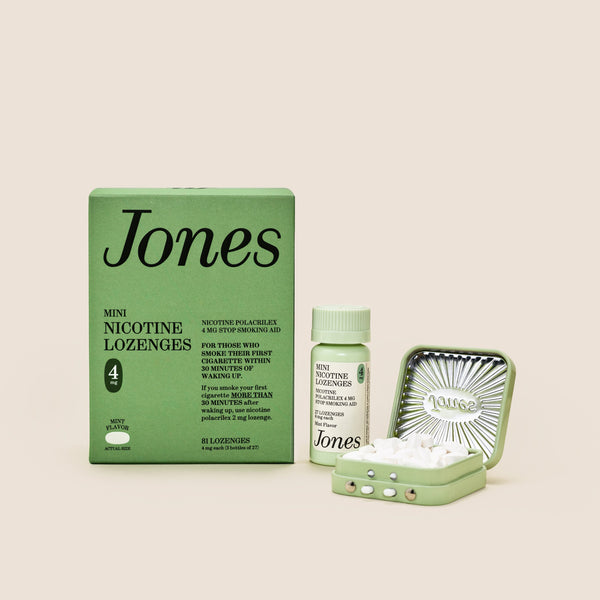
The way out is not to swap one spike for another. Vapes and pouches deliver nicotine fast and unmeasured, the pattern that built the habit. Jones nicotine mint lozenges deliver a measured 2 mg or 4 mg dose that dissolves in your cheek over 20 to 30 minutes, no smoke, no inhale. They are an FDA-approved stop smoking aid (nicotine polacrilex, ANDA 210711) on a 12-week step-down: one every 1 to 2 hours in weeks 1 to 6, every 2 to 4 hours in weeks 7 to 9, every 4 to 8 hours in weeks 10 to 12. Mint is the flavor in stock right now.
Your coffee can stay through all 12 weeks. The one rule from the label: nothing to eat or drink for 15 minutes before a mint or while it is in your mouth, because food and drink block the nicotine. Finish the cup, then tuck the mint in. If you are 21 or older, the product page walks you through 2 mg versus 4 mg in about a minute.
Nicotine vs caffeine FAQ
What people ask about the two stimulants
Is Nicotine a Stimulant or a Depressant?
A stimulant. NIDA describes the kick: an adrenaline release that raises blood pressure, breathing, and heart rate, plus a dopamine surge in the reward circuits. People ask is nicotine a stimulant or depressant because it also feels calming, but is nicotine a depressant or stimulant by its pharmacology? Stimulant, every time.
Why Does Nicotine Feel Relaxing?
Because most of the calm is relief. NIDA notes that nicotine's effects fade quickly and that withdrawal, irritability and anxiety included, can begin within hours of the last dose. The next hit ends it, which reads as relaxation. If nicotine is a stimulant why is it relaxing? It is quieting a craving it created. Nicotine stimulant or depressant, the chemistry says stimulant.
Can You Drink Coffee While Quitting Nicotine?
Yes. In the nicotine vs caffeine trade, the coffee stays: the FDA's 400 mg a day figure, about two to three 12-ounce cups, applies whether or not you are quitting. The one timing rule is the lozenge label's: no food or drink for 15 minutes before a mint or while it dissolves, since they block absorption. If sleep is rough in the first weeks, MedlinePlus lists caffeine as something to limit.
More on nicotine & your body
Keep reading

What Helps Brain Fog When Quitting Nicotine?
 Hilary Dubin, Co-Founder & Co-CEO of JonesFeb 18, 2026
 Mental health & cravings
Nicotine withdrawal timeline for smoking & vaping
 Caroline Huber, Co-Founder & Co-CEO of JonesJan 13, 2025
 Physical health
Does vaping cause high blood pressure?
Hilary Dubin, Co-Founder & Co-CEO of JonesSep 23, 2025