



You open the windows and the smoke is gone by morning. The smell hangs on in the couch and the car seats. That smell is the tip of thirdhand smoke: the residue smoke leaves on everything it touches.
Researchers have measured that residue in homes and cars for over a decade. Here is what they found, where the evidence is thin, and what helps.
TL;DR
Thirdhand smoke is the chemical residue tobacco smoke leaves on surfaces and dust, and it can stay for months or years. People pick it up by touch, by swallowing dust and by breathing what it releases back into the air, and babies are most exposed. Cleaning cuts it down but rarely removes it all, and only keeping smoke out of the home stops new buildup.
| Secondhand | Thirdhand | |
|---|---|---|
| What it is | Smoke in the air | Residue on surfaces & dust |
| How it reaches you | Breathing it in | Touch, swallowing, breathing |
| When | While someone smokes | Months to years later |
| Prevention | No smoking indoors | No smoking indoors, then cleanup |
Sources: CDC, Thirdhand Smoke Resource Center, peer-reviewed home studies (Matt et al.).
Chapter 1: What thirdhand smoke is
The part of smoking that stays behind
Thirdhand smoke is the chemical residue from tobacco smoke. It lingers in dust and on household surfaces and works its way into carpets, furniture and walls. The more often people smoked indoors, the deeper it goes.
Firsthand smoke is what the smoker inhales. Secondhand smoke is what everyone else breathes. Third hand smoke, spelled either way, is the layer left on the walls and on your hands once the air clears.
So what is third hand smoke made of? Nicotine is the main marker scientists measure, but the Thirdhand Smoke Resource Center (part of a California research consortium funded by the state's Tobacco-Related Disease Research Program) also lists tobacco-specific nitrosamines and heavy metals. It counts at least 25 chemicals in the residue known to cause cancer, harm fertility or cause birth defects.
The name came from a Dana-Farber/Harvard Cancer Center team. For the wider history, see thirdhand smoke on Wikipedia.
Chapter 2: How thirdhand smoke builds up & lingers
Soft things soak it up, dust holds it
Ask what is thirdhand smoke doing in a room after the last cigarette, and the answer is settling in. The resource center describes it soaking into walls, floors and HVAC systems. Once it is embedded, wiping the surface is not enough: the residue resurfaces and drifts back into the air.
It also changes over time. In a 2010 study in the journal PNAS, Berkeley Lab researchers found that nicotine stuck to indoor surfaces reacts with nitrous acid to form tobacco-specific nitrosamines, potent carcinogens. In lab tests, these chemicals on a model surface rose more than tenfold in three hours.
Airing out helps a little and fixes nothing. The resource center lists opening windows each week as one way to reduce residue, not remove it.
| Setting | What they found |
|---|---|
| Homes after smokers moved out | Residue remained after 2 months empty & a cleaning |
| Homes of people who quit | Polluted for up to 6 months after quitting |
| 220 San Diego apartments | Residue in every unit, though 88% of residents used no tobacco |
| Long-time smoking homes | High levels more than 5 years after the last cigarette |
Sources: Matt et al. 2011, Matt et al. 2017, Thirdhand Smoke Resource Center.
The quitter study is the one we think about most. In homes of smokers who quit, surface nicotine fell by about half in the first week, then stopped falling. Dust nicotine stayed near its old level, and the homes were still polluted six months later.
Chapter 3: Thirdhand smoke vs secondhand smoke
Same source, different timing
What is secondhand smoke, exactly? The CDC defines it as smoke from burning tobacco products plus the smoke a person breathes out. Its verdict is firm: there is no safe level of exposure to secondhand smoke, and even brief exposure can cause immediate harm.
That evidence is decades deep. In nonsmoking adults, the CDC links secondhand smoke to heart disease, stroke and lung cancer; in children, to ear infections and asthma attacks; in babies, to sudden infant death syndrome.
Thirdhand smoke is the same pollution, later. It reaches you through skin and mouth as well as lungs, and it sits in rooms where nobody is smoking now. Most of its health evidence comes from lab and animal studies, as the next section shows.
Vapes leave residue too, at lower levels in the research so far. For the bigger picture, see vaping vs smoking compared.
Chapter 4: Who thirdhand smoke affects most
The people closest to the floor
Most of what is known about thirdhand smoke effects comes from lab and animal work. In the resource center's summary, lab studies show the residue damaging human cells in a dish, and studies in mice link it to slower wound healing and lung inflammation. In people, a UC San Francisco study found lung cell damage in nonsmoking volunteers after three hours of exposure.
Those results do not show how much harm everyday home levels do to people over years, and research in people is still limited. Exposure is not in doubt, though: researchers have measured its toxicants in newborns, children and nonsmoking adults living in polluted homes.
Babies & young children
Crawling, chewing, breathing fast
The concern behind most searches for third hand smoke and babies is well founded. The resource center explains why: infants spend about 90% of their time indoors at home, crawl through the dust where residue collects, and put nearly everything in their mouths.
Babies also breathe faster than adults, so they take in more for their size, and their skin is thinner. Researchers at Cincinnati Children's Hospital and San Diego State found exposed children were more likely to be diagnosed with lung illness and infections, a link that does not prove cause.
The American Academy of Pediatrics points out that children whose parents smoke only outside are still exposed to the chemicals, and that residue can sit in a child's hair after a caregiver smokes nearby.
Pets in smoking homes
Fur, floors & grooming
An FDA veterinarian points out that dogs and cats, like toddlers, live near the floor, where residue concentrates in dust and rugs. It gets on their fur, and they swallow it when they groom or lick your skin and clothes.
The animal research is small. In one study of 32 dogs, dogs living with smoking owners had higher cotinine, a nicotine byproduct, in blood and fur than dogs in smoke-free homes. That measured smoke exposure overall, not residue alone.
Chapter 5: How to start clearing thirdhand smoke
Reduce what you can, replace the rest
Cleaning helps but rarely finishes the job. In a trial in apartments with past smoking, dry, damp and wet cleaning together cut surface nicotine by about half. Dust nicotine dropped 60%, then climbed back within three months as leftover reservoirs refilled it. Plan on repeat rounds.
Clean the surfaces that hold residue
Walls, floors & everyday objects
The resource center's routine: wipe surfaces regularly with diluted white vinegar, dust often, vacuum with a HEPA filter, and air rooms out weekly. Run dishes and hard toys through the dishwasher, more than once if they came from a heavily polluted home.
Know the limits. Paint can trap residue and hide the smell for a while without removing it, the center warns. Fragrances cover the smell, and ozone generators change odors but leave the embedded chemicals behind. In a home smoked in for years, walls and floors may need replacing.
Wash fabrics & replace filters
Wash what you can, replace the rest
Clothes, bedding and soft toys can go in the machine. Depending on how polluted they are, the center says you may need to wash them multiple times.
Carpets, mattresses and upholstery cannot be soaked and scrubbed, so they keep releasing residue, and even professional deep cleaning often fails. Those usually need replacing.
HVAC units and air ducts hold residue too, and the center calls them hard and costly to clean. A fresh air filter is sensible housekeeping, but do not count on it to remove residue.
Keep your home smoke free
The only fix that holds
The CDC says completely eliminating smoking is the only way to fully protect people who do not smoke, and the resource center's advice for preventing buildup is no smoking in or around your home or car. New smoke refills whatever you clean.
The kindest version of that is quitting, for you and everyone on your couch. A small pilot study even linked more nicotine in house dust to lower odds of staying quit, so clearing residue may help the quit itself, though that needs more research.
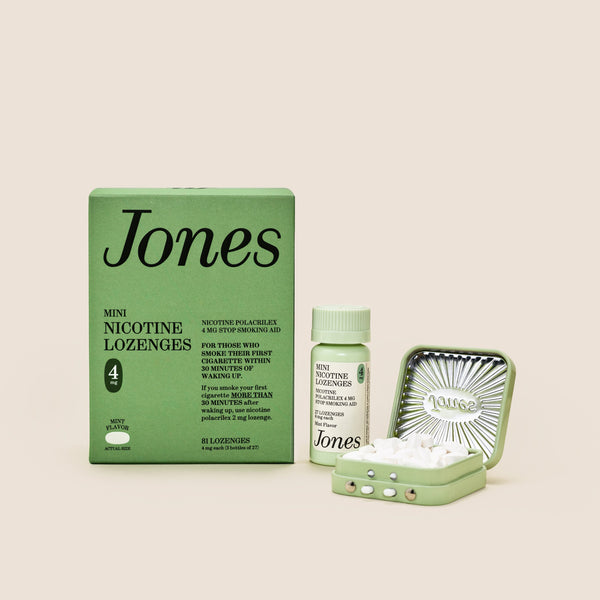
When you are ready, start with Jones quit kits for smoking, or go straight to Jones nicotine mint lozenges, an FDA-approved stop smoking aid in 2mg or 4mg. A lozenge makes no smoke, so it adds no new smoke residue to your home. Pregnant, breastfeeding or have a heart condition? Check with your doctor first, and keep the tin away from kids and pets, as the Drug Facts label says.
Thirdhand smoke FAQ
What quitters ask us
How long does thirdhand smoke last?
Months to years. In one study, homes of smokers who quit were still polluted six months later, and the Thirdhand Smoke Resource Center has measured high levels on surfaces more than five years after the last cigarette. How long does thirdhand smoke last in your home depends on how much and how long people smoked there. After light, occasional smoking, much of it may clean up. Years of heavy indoor smoking usually means replacing carpets and upholstery.
Is thirdhand smoke dangerous?
It contains harmful chemicals, and exposure is measurable in people, so it is worth avoiding. Is thirdhand smoke dangerous at everyday levels? That part is less settled. Much of the evidence of harm comes from lab and mouse studies, and research in people is still limited. Babies and young children get the most exposure, and the American Academy of Pediatrics says the best way to protect them from smoke exposure is to quit.
Does vaping leave thirdhand residue?
Yes, though less than smoking in the studies so far. Secondhand vape smoke, really an aerosol, settles on surfaces: in a lab chamber test, nicotine on floors rose about 47-fold after vaping. In a small study of homes, vapers' homes had far less surface nicotine than smokers' homes. Researchers have also found nicotine and other toxic nicotine-related chemicals on surfaces in vape shops. The evidence is newer, so keeping vapes out of your home and car is the safe call.
More guides to quitting & the people you love
Keep reading
 How to Quit
How to help your partner quit vaping or smoking
 Hilary Dubin, Co-Founder & Co-CEO of JonesAug 8, 2024
 How to Quit
Vaping vs smoking - Is one better or worse?
 Caroline Huber, Co-Founder & Co-CEO of JonesNov 24, 2024
 Tools & alternatives
Nicotine Replacement Therapy: Benefits & Risks
Hilary Dubin, Co-Founder & Co-CEO of JonesAug 23, 2023